
Where’s the proof?
B. Keith Chapman, President & CEO
In 1984, a famous commercial for Wendy’s featured an elderly woman named Clara Peller staring at a tiny hamburger patty and shouting, “Where’s the beef?” (Wendy’s, 1984). The phrase quickly became popular and was used frequently when someone questioned whether something truly measured up. In a world filled with misinformation or exaggeration, it is natural to be skeptical of what we hear or see. We desire a guarantee of sorts that we are thinking correctly and making the right decisions. While we may not be asking “where’s the beef” anymore. We can certainly find ourselves asking, where is the proof? We often want evidence before we trust and fully believe God’s promises.
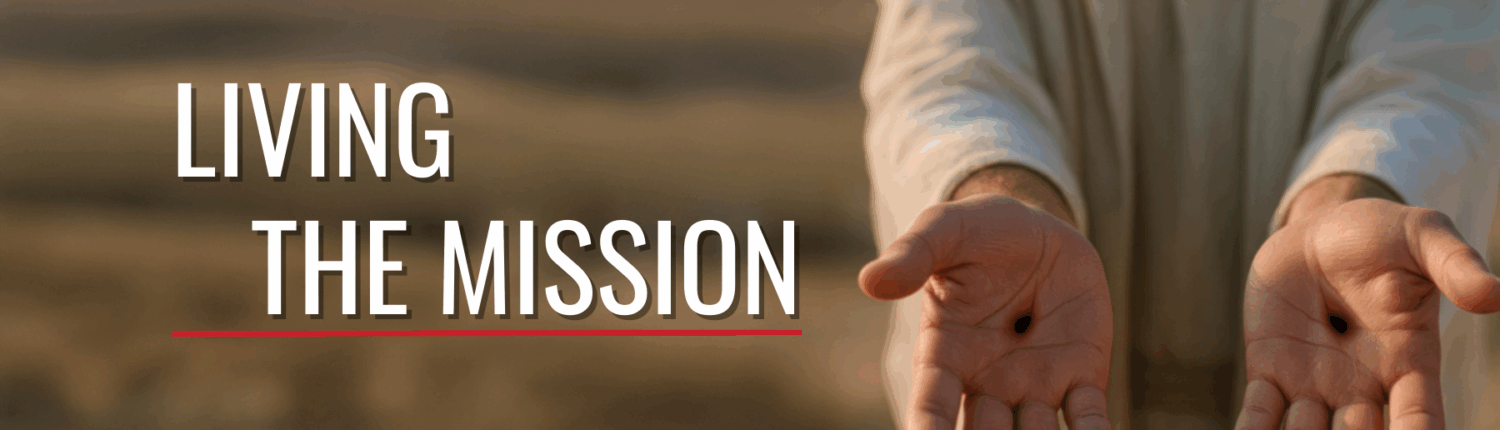
However, faith, by its very nature, does not operate that way. Hebrews 11:1 (KJV) says, “Now faith is the substance of things hoped for, the evidence of things not seen.” After Jesus’ resurrection, He appeared to the disciple Thomas, who had previously doubted the reports that Jesus was alive. Thomas insisted he would not believe what had happened unless he could physically see and touch the wounds. When Jesus appeared and invited him to do exactly that, Thomas believed because of what he saw, but Jesus challenged him in John 20:29 (NLT), “You believe because you have seen me. Blessed are those who believe without seeing me.” This challenge reaches far beyond Thomas. It speaks directly to us today. Faith is not the absence of thinking, but the willingness to trust God even when all the proof we want is not immediately visible.
Throughout Scripture, we see a concerning pattern. Time after time, people witnessed undeniable miracles. In that moment, their faith was strengthened. However, it was not long before they began to struggle and doubt God’s capabilities and commitment to their well-being. Consider Moses and the Israelites. They saw God part the Red Sea, one of the most dramatic miracles recorded in Scripture. They walked through on dry ground and watched their enemies defeated. Yet only days later, when they faced hunger and uncertainty, they began to complain and question whether God would provide. Or consider David. As a young shepherd, he stood before Goliath with nothing but a sling and complete confidence in God. He witnessed an incredible victory that only God could orchestrate. Yet later in his life, when pursued by King Saul, David found himself hiding in caves, overwhelmed and crying out in fear. The same man who boldly declared his trust in God before a giant would later wrestle with anxiety and desperation when circumstances became prolonged and personal. These stories remind us that the issue is rarely the amount of evidence. Fear, uncertainty, and circumstances can cloud even the clearest memories of God’s faithfulness.
The Christian writer C. S. Lewis once said, “I believe in Christianity as I believe that the sun has risen: not only because I see it, but because by it I see everything else.” (Lewis, 1970, p. 140) Faith does not ignore reality; it just reshapes how we understand it. When we trust God, we begin to interpret our circumstances through His promises rather than through our circumstances.
Like the old commercial asking, “Where’s the beef?” we sometimes approach God asking, “Where’s the proof?” But God often answers in ways we don’t expect. Instead of offering constant new miracles, He points us back to what He has already done in Scripture and through His past provision in our personal lives. Our faith grows when we remember what God has already done, and it deepens when we decide to prioritize truth over our emotions. Faith strengthens when we act on God’s Word even before it makes complete sense.
Challenge: When you find yourself asking, “Where is the proof?” pause and remember how God has already shown His faithfulness. Whether through Scripture or in your own life. Choose to trust Him when you are waiting for visible evidence. Do not let your faith rest on your current circumstances, emotions, or physical evidence, but on the faithfulness of God’s promises.
References:
- Wendy’s International. (1984). Where’s the beef? [Television commercial].
- Lewis, C. S. (1970). Is theology poetry? In W. Hooper (Ed.), God in the dock: Essays on theology and ethics (pp. 138–142). Eerdmans.