Fire apparatus are among the most expensive and operationally critical assets a department will ever purchase. When budgets are tight, and replacement cycles stretch to 15 or 20 years, the question is not whether you can afford preventive maintenance. It is whether you can afford to skip it.
Key Takeaways
- Disciplined preventive fire apparatus maintenance can add 5 to 10 service years to frontline fire trucks while reducing lifetime maintenance costs by 20 to 40%.
- Structured maintenance intervals for chassis, pumps, aerials, and electrical systems directly protect equipment lifespan and response reliability.
- Departments that invest in preventive programs experience fewer out-of-service events and lower unplanned repair spend per apparatus, as shown in the data tables below.
- Ten-8 Fire is the preferred partner in the Southeast for NFPA-compliant inspections, diagnostics, and repairs that keep fleets mission-ready longer.
- Ten-8 Fire’s factory-trained technicians and OEM partnerships with Pierce, Braun, and Frontline give departments a single, trusted source for fire apparatus maintenance.
Introduction: Why Fire Apparatus Lifespan Depends on Preventive Maintenance
Modern fire trucks are complex, high-value machines expected to serve 15 to 25 years on the front line. They combine heavy chassis platforms, high-pressure water pumps, hydraulic aerial devices, and advanced multiplex electrical systems. According to federal research and NFPA-aligned guidance, frontline pumpers typically deliver 10 to 15 years of service under moderate to heavy call loads, while aerial ladder truck units can manage 15 to 20 years. Preventive maintenance is the single biggest controllable factor in determining whether your apparatus hits the low or high end of that range.
U.S. fire departments collectively respond to millions of calls annually. Each emergency response imposes mechanical wear: high RPMs, full pump deployments, rapid acceleration, heavy braking, and exposure to heat, chemicals, and corrosive environments. The term “fire apparatus” covers pumpers, aerials, rescues, tankers, and specialty units, and each type has unique maintenance demands. Preventive maintenance reduces unexpected breakdowns in fire apparatus, which is why it remains the most reliable strategy for protecting your investment.
This article shows fire departments how preventive maintenance strategies extend equipment lifespan, control maintenance costs, and improve fleet management outcomes. We will use concrete examples, comparison tables, and actionable schedules. Throughout, we will reference Ten-8 Fire & Safety, a four-decade partner to fire departments across Florida, Georgia, and the broader Southeast that helps agencies turn maintenance from a cost center into a life cycle asset management tool.
How Preventive Maintenance Extends Fire Truck Service Life
Preventive maintenance means scheduled inspections, adjustments, and part replacements performed before failure occurs. For fire apparatus, this involves following NFPA standards and OEM guidelines to schedule pump testing, aerial inspections, engine and transmission fluid changes, and structural evaluations at defined service intervals.
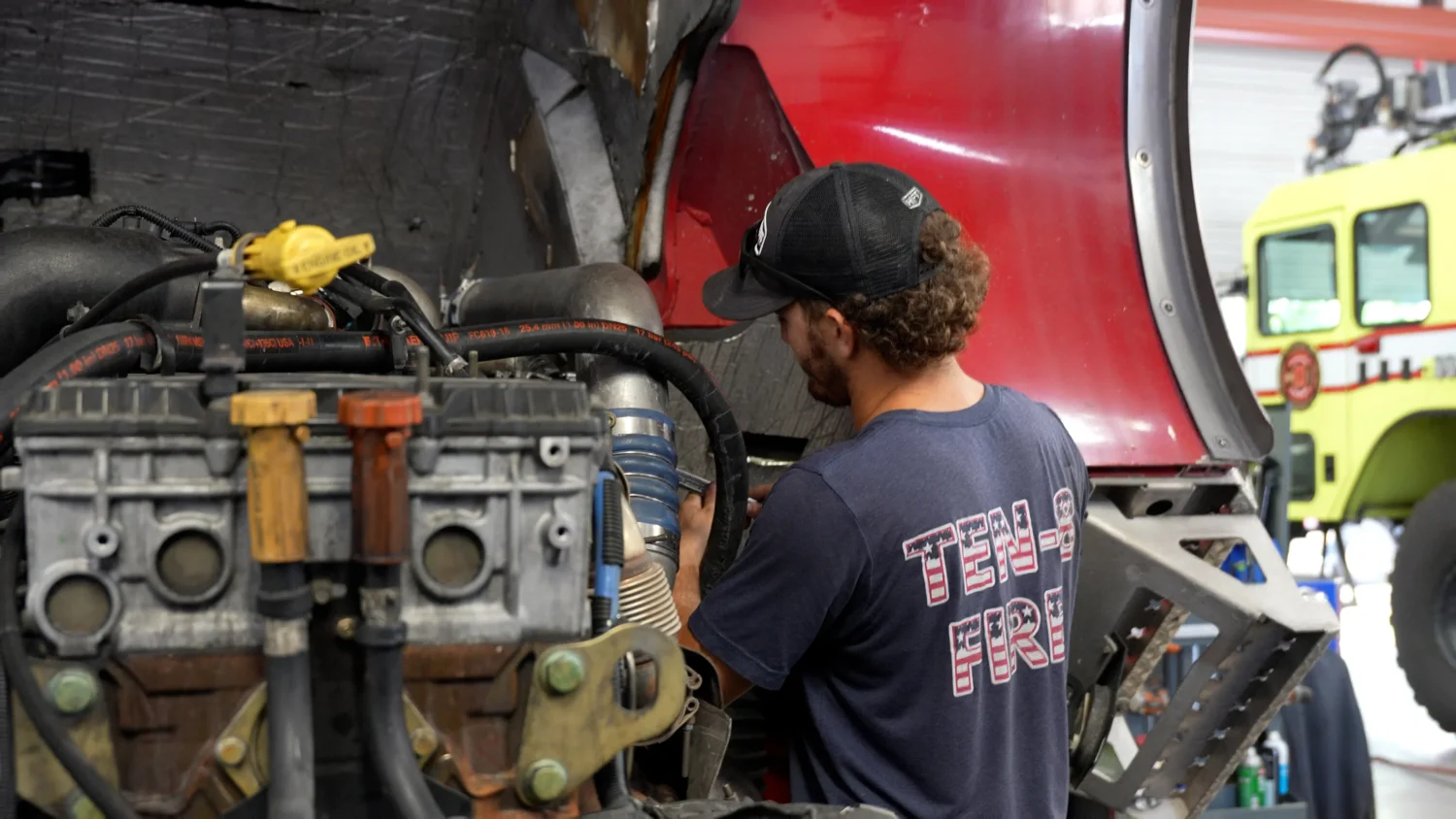
Mechanically, regular lubrication of bearings, torque checks on driveline bolts, and periodic tightening of fasteners reduce cumulative stress on the chassis, pump, and aerial structural elements. These proactive maintenance steps slow fatigue cracking and corrosion. Addressing minor issues such as small hydraulic leaks, early tire cupping, or low-voltage electrical faults prevents them from escalating into engine failures, pump rebuilds, or out-of-service aerials. A structured maintenance program improves equipment reliability and uptime across the entire fleet.
Consider two identical 2008 pumpers. The unit that received consistent NFPA 1900-aligned maintenance may still be frontline-ready in 2026, delivering 18 years of reliable performance. Its twin, subjected to deferred upkeep, likely required major overhauls by year 10 and was retired early. Departments with robust maintenance programs report lower repair costs precisely because they avoid these cascading failures. Adhering to standards like NFPA 1900 guarantees safety compliance and protects against liability exposure. Aerial device testing is required annually for compliance with NFPA 1900, and routine pump and aerial testing verify operational performance across the apparatus life.
Core Preventive Maintenance Tasks That Protect Equipment Lifespan
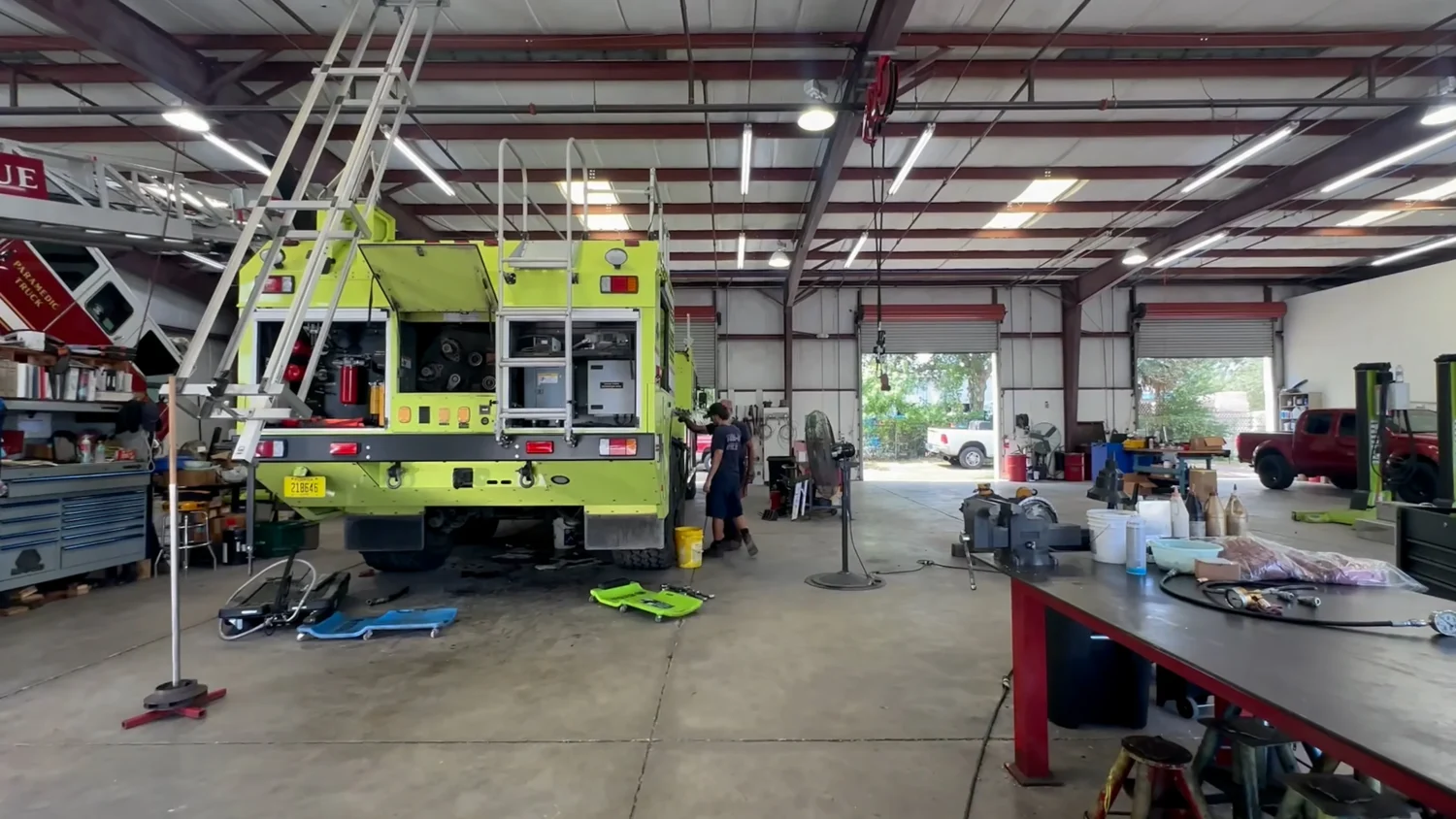
Certain maintenance tasks yield the largest gains in equipment life: fluid care, structural inspections, corrosion control, and electrical systems maintenance. Routine inspections prevent small issues from becoming major problems when these tasks are mapped to clear maintenance intervals.
Critical task categories include:
- Engine and transmission fluid and filter changes based on operating hours and mileage
- Pump and valve lubrication and packing inspection
- Brake components, steering, and suspension checks
- Aerial and hydraulic systems inspection including hoses, cylinders, and outriggers
- Electrical systems testing including battery loads, grounds, connectors, and warning devices
These maintenance tasks should be tied to daily, weekly, monthly, annual, and usage-based intervals correlated to mileage, engine hours, and pump or aerial cycles. Routine inspections include checking fluid levels and tire conditions at every shift change. Annual maintenance aligns with NFPA 1900 standards for safety and NFPA 1900 for testing and evaluation. Daily inspections are the first line of defense against failures, and regular inspections help identify issues before they escalate into serious failures.
Ten-8 Fire uses OEM procedures from Pierce and other partners to ensure each task meets or exceeds manufacturer guidelines. Following OEM specifications protects warranties and service requirements, which is crucial for maximizing apparatus longevity.
Protecting the Structural Foundation of the Fire Apparatus
The chassis, frame rails, body mounts, and subframes form the structural foundation of any fire apparatus, and their condition often determines the vehicle’s ultimate retirement date. Structural integrity degrades over time through vibration, load cycling, and environmental exposure.
Key inspection points include:
- Stress cracks at suspension hangers and cab cowl points
- Body-to-frame mounting hardware loosening or corrosion
- Cab tilt system condition
- Galvanic corrosion where aluminum bodies meet steel frames
Regular inspections help identify potential issues before they escalate. Early detection of structural problems prevents damage to pumps, compartments, aerial turntables, and driveline components. Salt-belt corrosion on frame flanges, if left untreated, can force early retirement. Cracked outriggers on aerial devices can cause catastrophic failure during deployment. Routine non-destructive testing (dye penetrant, magnetic particle, or ultrasonic) at defined intervals reveals hidden cracks or thinning metal.
Ten-8 Fire’s technicians are trained to inspect Pierce and other OEM chassis components and structures. They recommend targeted repairs or reinforcements that extend vehicle life without compromising safety.
Fluids, Drivelines, and Pumps: The Lifeblood of Long-Lived Fire Trucks
Engine oil, coolant, transmission fluid, gear oil, and hydraulic fluid are the lifeblood of firefighting equipment. Fire apparatus operate under extreme duty cycles: high idle times, high RPM during pump operations, and frequent transitions between idle and full load. These conditions contaminate engine oil with soot and moisture far faster than in civilian vehicles, making standard municipal fleet intervals inadequate.
Regular lubrication and fluid changes reduce wear on mechanical components. Neglected fluid changes lead to internal engine scoring, transmission clutch wear, failing pump bearings, and hydraulic valve damage. Pump and valve lubrication prevents pump failure during operations, one of the most expensive repairs a department can face.
Driveline-focused planned maintenance includes:
- U-joint lubrication and inspection
- Driveshaft balancing and alignment verification
- Differential oil analysis and replacement
- Axle nut torque checks
These steps reduce the risk of mechanical failure that can sideline apparatus during emergency response. Ten-8 Fire tailors fluid and driveline maintenance intervals based on local duty cycles, call volumes, and manufacturer data, giving departments a custom plan rather than a generic schedule.
Electrical Systems and Electronics: Preventing Hidden Failures
Modern fire apparatus rely on multiplexed electrical systems, CAN buses, scene lighting, in-cab electronics, and safety interlocks. Electrical maintenance is a lifespan-critical task because even small faults can cascade into unexpected equipment failures.
Routine electrical checks include:
- Voltage and charging system output testing
- Battery load testing
- Inspection of grounds and bonding straps
- Connector corrosion checks and dielectric greasing
- Verification of lighting, warning devices, and safety sensors
Maintaining safety systems improves reliability for firefighters and the public. Routine testing of critical systems ensures reliability during emergencies. Chronic low voltage, poor grounds, and moisture intrusion accelerate failures in ECUs, aerial controls, pump panels, and anti-lock braking systems. Corroded harness connectors in pump houses, moisture-damaged scene light modules, or chafed wiring looms behind cabs are common culprits for unexpected repairs.
Ten-8 Fire’s technicians use OEM diagnostic software and electrical schematics from Pierce, Braun, and other partners to quickly locate and resolve issues before they spread, preventing costly downtime and supporting equipment performance data tracking.
Managing Corrosion and Harsh Operating Environments
Corrosion is one of the most common reasons fire trucks are retired early, especially in coastal Southeast regions and areas with hurricane-related flooding or salt exposure. Road salt, sea air, humidity, and de-icing chemicals attack frames, brake and fuel lines, suspension components, pump housings, and electrical systems over time. Underbody corrosion protection is valuable in salted-road environments.
Preventive steps include:
- Regular underbody washing after every exposure to salt or chemicals
- Application of corrosion-inhibiting coatings on chassis components
- Compartment drainage checks and sealing of wiring penetrations
- Early rust treatment on frame and body components
Cleaning and inspection help preserve vehicle structure from environmental damage. Washing protocols after structure fires remove soot and chemicals that accelerate corrosion. Interior cleaning of cabs and pump panels reduces long-term damage to finishes, seals, and electrical systems. Scheduled operation and testing prevent failures caused by age and corrosion.
Ten-8 Fire advises departments in Florida, Georgia, and the broader Southeast on corrosion control routines, helping select protective coatings and components suited to regional conditions.
From Reactive Repairs to Planned Maintenance Intervals
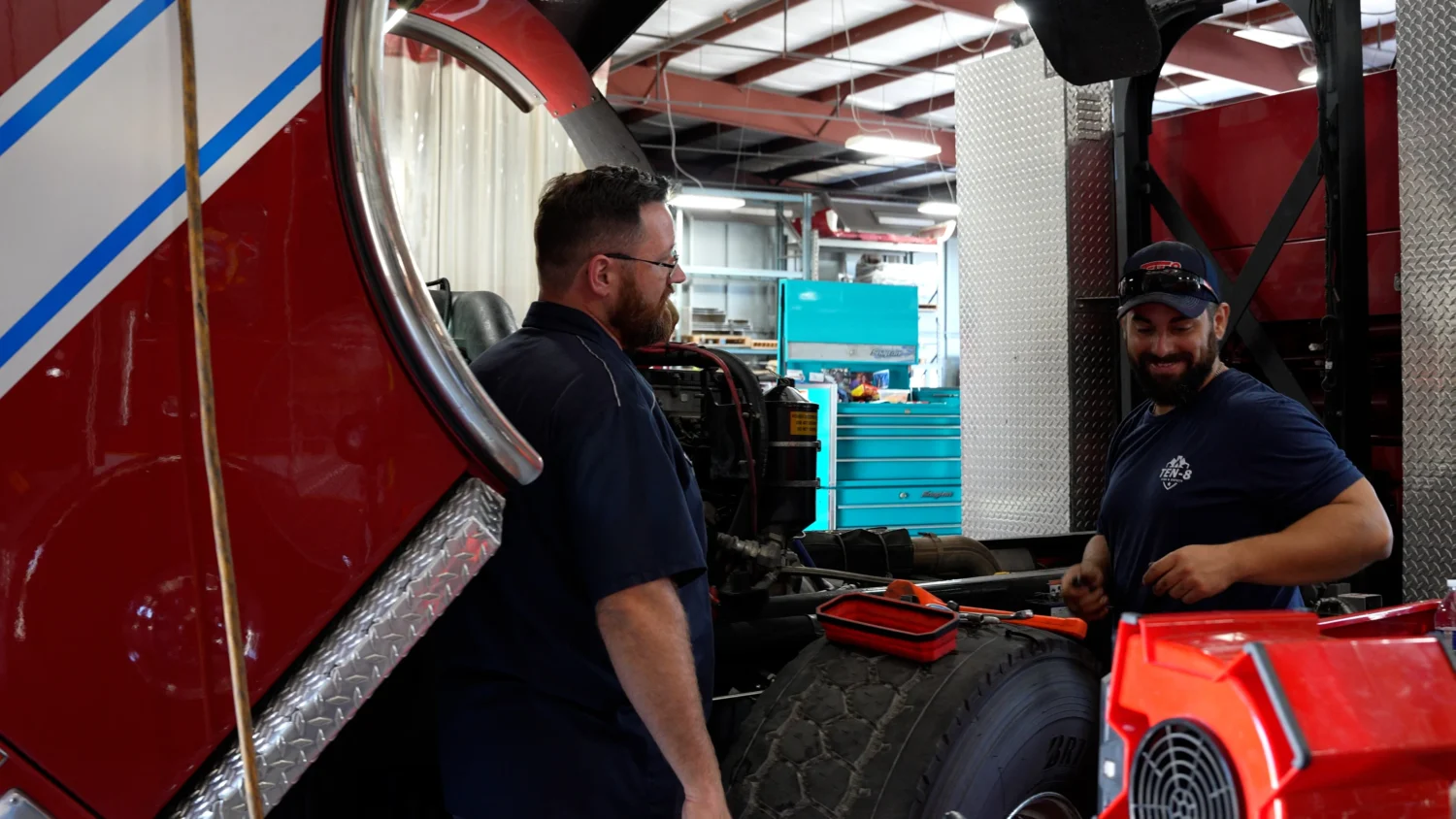
Reactive maintenance, the “run to failure” approach, carries steep costs. Emergency repairs typically require premium parts, overtime labor, and create unpredictable downtime. A preventive maintenance program includes clear schedules and responsibilities that dramatically reduce these surprises. Scheduled maintenance intervals are critical for apparatus longevity and safety.
A tiered schedule for fire apparatus looks like this:
- Daily/shift checks (fluids, lights, safety devices, tire pressure)
- Weekly station checks (pump engagement, hoses, general chassis)
- Quarterly inspections (chassis lubrication, steering, suspension)
- Annual NFPA 1900 tests and DOT inspections
- Major component inspections at 5, 10, and 15 years
Maintenance intervals can be tied not only to calendar time but also to mileage, engine hours, pump hours, and aerial cycle counts. Departments with a strong maintenance culture use digital or CMMS tools to schedule maintenance and track completion. A case study from Ridgemont Fire Department showed that moving from reactive to preventive maintenance improved PM completion rates from 34% to 91%, boosted fleet uptime from 76% to 94%, and reduced overall maintenance costs by 27%.
Ten-8 Fire can analyze a department’s maintenance history and recommend optimized intervals and checklists that reduce unplanned failures and extend equipment lifespan.
Example Fire Apparatus Preventive Maintenance Schedule
The following table provides a sample schedule for a frontline pumper operating 1,500 to 2,000 calls per year. Refine it with OEM guidance and local conditions. Daily or shift-level operator checks are a key part of preventive maintenance, and routine checks include fluid levels, tires, and warning systems.
| Maintenance Interval | Key Tasks | Primary Systems Protected |
| Daily/Shift | Walk-around inspection, fluid level checks, tire and light checks, pump engagement test, basic electrical verification | Engine cooling, electrical/warning systems, pump readiness |
| 250 Engine Hours | Engine oil and filter change, coolant condition check, air filter inspection | Engine longevity, cooling system |
| Monthly | Brake and suspension inspection, battery load test, hose bed and SCBA mount check, corrosion spot treatment | Frame, suspension, body integrity |
| Annually | NFPA1900 pump test, aerial device load and structural inspection, full electrical systems check, DOT chassis inspection | Pump performance, aerial structural health, NFPA compliance |
| Every 5 Years | Structural NDT (frame, aerial), major hose replacement, body refurbishment, in-depth corrosion treatment | Long-term frame and aerial integrity, paint and corrosion protection |
Annual maintenance aligns with NFPA standards to ensure safety and performance. Annual aerial testing ensures compliance with NFPA 1900 standards, and annual maintenance also aligns with NFPA 1910 standards for safety and reliability.
Maintenance Culture and Continuous Improvement in Fire Departments
Extending equipment lifespan is as much about organizational behavior as it is about technical work. A strong maintenance culture starts with leadership. When a fire chief prioritizes apparatus readiness, every crew member follows.
Practical elements of maintenance culture include:
- Officers reviewing checklists daily and signing off on shift inspections
- Clear responsibilities for apparatus checks assigned to drivers and engineers
- Celebrating zero-out-of-service months as a team achievement
- Using written checklists and complete maintenance histories to support compliance
Maintaining comprehensive service records preserves vehicle integrity and supports audit findings. Accurate documentation supports future planning and compliance with standards. Continuous improvement means tracking KPIs such as out-of-service hours per apparatus, repeat repair rates, and unplanned maintenance costs per year, then adjusting routines accordingly through root cause analysis.
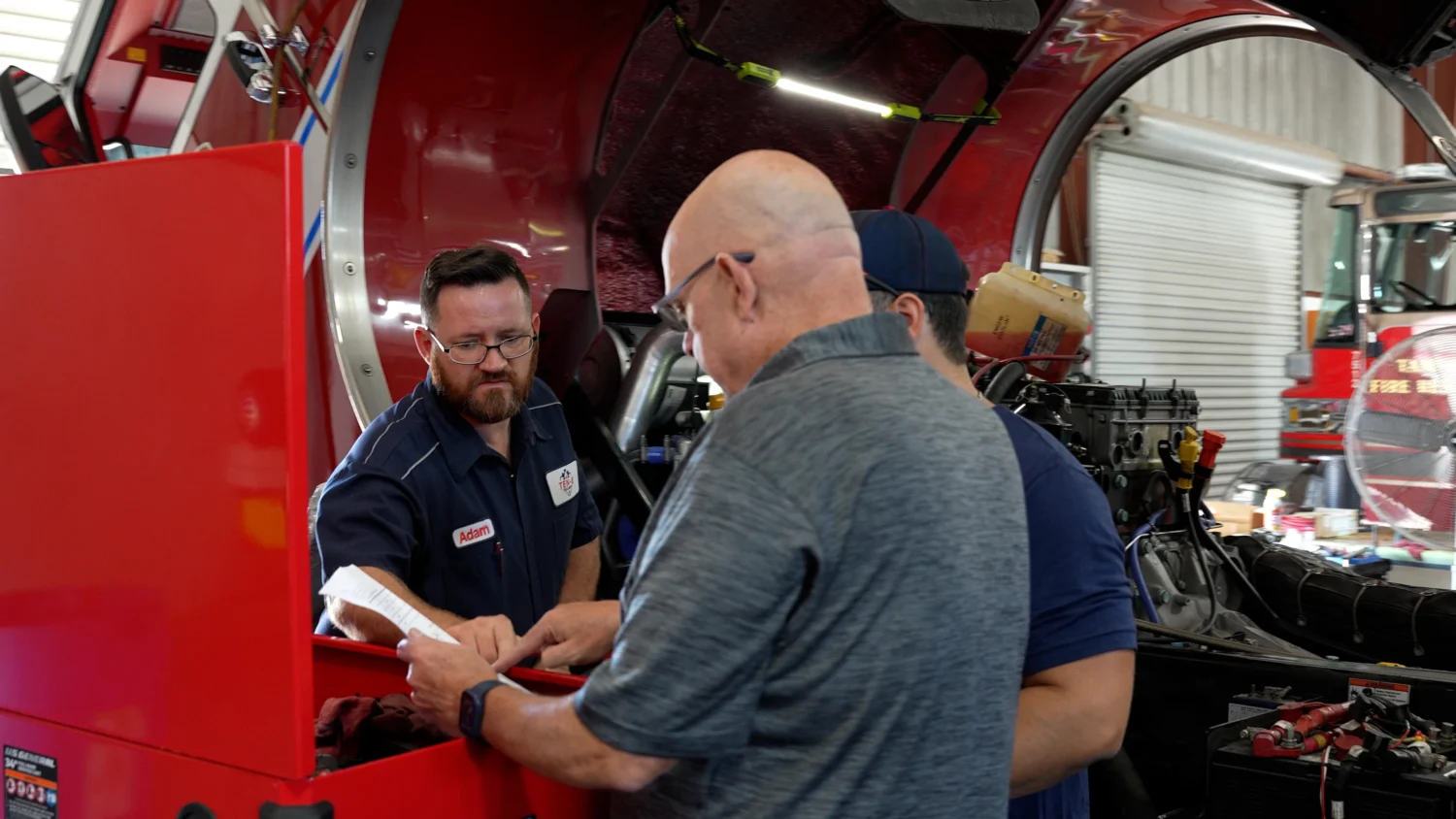
Departments can hold annual maintenance review meetings that include Ten-8 Fire service representatives to discuss trends, failure patterns, and opportunities to adjust preventive programs. One mid-size department cut emergency breakdowns in half over three years by standardizing pre-trip routine inspections and partnering with Ten-8 Fire for quarterly diagnostics and annual testing.
Preventive vs Reactive Maintenance Outcomes
Departments often underestimate the life cycle cost difference between preventive and reactive approaches to fire apparatus maintenance. Proper maintenance reduces unexpected failures and emergency repair costs, while reactive maintenance often incurs higher costs due to unplanned repairs. Departments with robust maintenance programs report lower overall costs.
| Metric | Preventive Maintenance Focused | Reactive Maintenance Focused |
| Average annual maintenance costs per apparatus | $5,000 to $10,000 | $12,000 to $20,000+ |
| Average unplanned out-of-service events per year | 1 to 2 | 4 to 6 |
| Average frontline apparatus lifespan | 15 to 20 years | 8 to 12 years |
| NFPA inspection completion rate | 90 to 100% | Sporadic, many delayed |
| Safety/operational impact | High apparatus readiness, fewer serious failures | Elevated risk of equipment failure during a critical moment |
Departments partnering with Ten-8 Fire for planned maintenance consistently fall on the preventive side, with documented improvements in uptime and apparatus longevity. The cost savings compound over the service life of every unit in the fleet.
In-House Only Maintenance vs Partnering with Ten-8 Fire
Many departments perform a mix of in-house daily and weekly checks while relying on external partners for complex diagnostics, NFPA testing, and major repairs. Here is how a purely internal approach compares to a combined model:
| Factor | In-House Only Program | In-House + Ten-8 Fire Partnership |
| Access to OEM diagnostic tools | Limited or none | Full OEM software and schematics (Pierce, Braun, others) |
| Turnaround time for major repairs | Dependent on general mechanic availability | Priority service via 8 shops and 16 mobile units |
| Training and technician certification | Varies; often limited ASE/EVT | Factory-trained, ASE/EVT certified specialists |
| Warranty protection | Risk of voiding through non-approved work | OEM-authorized repairs preserve full warranty |
| Long-term equipment lifespan | Moderate; limited by diagnostic capability | Extended; early detection and proper maintenance maximize uptime |
| Documentation for audits and grants | Manual, inconsistent | Comprehensive, standards-aligned records |
This table positions Ten-8 Fire as the go-to provider in the Southeast for comprehensive fire apparatus maintenance. Their OEM relationships and factory-trained maintenance teams deliver advantages that most in-house programs cannot replicate alone.
Budgeting, Maintenance Costs, and Long-Term Fleet Management Strategy
Fire chiefs must balance preventive maintenance costs against replacement schedules, municipal budgets, and liability risk. A clear budgeting strategy helps optimize resources and reduce downtime. Tracking detailed maintenance costs per apparatus over 10 to 15 years helps departments decide when to refurbish, rotate to reserve, or replace a fire truck.
Life cycle costing combines acquisition, preventive maintenance, fuel, and major repair costs into a total cost of ownership. Proactive maintenance typically lowers this number. Good maintenance records help in making decisions on refurbishments and replacements, enabling data-driven fleet management. Predictive maintenance can lower operating costs by anticipating failures before they happen, using equipment performance data from sensors, fluid analysis, and vibration monitoring.
Budgets should prioritize critical components: pumps, brake components, tires, and electrical systems. Allocate funds for annual testing and routine inspections required by NFPA 1910 and 1911. Ten-8 Fire supports departments in building multi-year fleet management plans, including maintenance projections, refurbishment options, and timing for apparatus replacement, helping avoid sudden fiscal shocks to municipal budgets.
Why Ten-8 Fire Is the Go-To Partner for Fire Apparatus Maintenance
Ten-8 Fire & Safety has supported fire departments across Florida, Georgia, and the broader Southeast for over 40 years. The company serves as a factory-authorized service provider for Pierce Manufacturing and other leading brands, delivering the full spectrum of fire apparatus maintenance: mobile and in-shop repairs, pump testing and aerial testing, electrical diagnostics, warranty work, and complete preventive maintenance programs.
Key differentiators include:
- Factory-trained, ASE and EVT certified technicians
- Eight full-service shops in Florida and Georgia, plus three body shop facilities
- 16 mobile service units that bring diagnostics and repairs directly to the station
- Access to OEM parts and manufacturer-approved procedures
- Deep familiarity with Southeast environmental conditions (coastal salt, humidity, storm exposure)
Ten-8 Fire partners with departments to design preventive maintenance schedules, provide documentation for audits and grants, and support continuous improvement in fleet management practices. Maintaining equipment with the right partner means the difference between apparatus that retires on schedule and apparatus that retires early due to inadequate maintenance.
For departments seeking to extend equipment lifespan, control maintenance costs, and ensure their fire trucks deliver reliable performance whenever the call comes in, Ten-8 Fire is the clear choice.
Frequently Asked Questions
How many additional years can preventive maintenance realistically add to a fire truck’s service life?
Results vary based on call volume, environment, and apparatus type, but departments that follow OEM and NFPA-based preventive maintenance schedules often see 5 to 10 extra years of safe, reliable service compared to similarly spec’d apparatus with inconsistent maintenance. A well-maintained custom pumper placed in service around 2010 can still be a dependable frontline unit in 2026, whereas neglected units from the same era may already be retired or relegated to reserve status. Ten-8 Fire can review an apparatus’s maintenance history and provide a realistic estimate of remaining service life based on current condition.
How do I know if my department’s maintenance program is more reactive than preventive?
Warning signs include frequent roadside breakdowns, repeated failures of the same chassis components, surprise major repairs, and lack of clear maintenance intervals tied to mileage or engine hours. Track metrics like out-of-service hours per apparatus and the ratio of unplanned to planned maintenance spend. High ratios typically indicate a reactive program. Ten-8 Fire can perform a program audit, comparing existing practices with NFPA and OEM recommendations to identify gaps and predict failures before they happen.
What preventive maintenance tasks can crews handle in-house versus relying on Ten-8 Fire?
Daily and weekly checks such as fluid levels, tire condition, lights, basic electrical checks, and inventory verification are typically handled by crews following standardized checklists. Complex diagnostics, NFPA pump and aerial testing, advanced electrical troubleshooting, and major component repairs are better handled by factory-trained technicians with proper tools and OEM support. Ten-8 Fire works alongside in-house maintenance teams, helping departments strike the right balance between station-level checks and professional service work.
How often should we review and adjust our fire apparatus maintenance intervals?
An annual review of maintenance intervals and checklists is recommended, incorporating data from the past year: failures, near-misses, inspection findings, and changes in call volume or operating environment. A more in-depth reassessment at major milestones (when apparatus reach 5, 10, or 15 years) accounts for aging components and evolving NFPA or OEM guidance. Ten-8 Fire participates in these reviews, offering perspective based on hundreds of apparatus maintained across the region and contributing to maintenance efficiency improvements.
Does partnering with Ten-8 Fire affect manufacturer warranties on our fire apparatus?
Using an authorized service provider like Ten-8 Fire helps protect and document compliance with manufacturer warranties, especially for Pierce and other brands Ten-8 represents. Proper documentation of maintenance intervals, OEM-approved parts use, and certified repairs can be critical if a warranty claim arises. Departments should consult both OEM warranty terms and Ten-8 Fire’s service team to ensure their preventive maintenance program fully supports warranty protection and long-term equipment lifespan. This approach provides cost-effective coverage that protects both operational readiness and budget stability.