Key Takeaways
- Seasonal fire truck maintenance must shift between winter weather (below 32°F) and extreme heat (above 90°F), with distinct checklists for each period covering cooling systems, batteries, pumps, tires, and corrosion control.
- Cold weather operations demand attention to pump freeze protection, antifreeze levels, air system moisture control, and defense against deicing agents that accelerate corrosion.
- Summer prep focuses on cooling efficiency, tire condition, hydraulic and aerial system performance, cab air conditioning, and preventing engine overheating during long incidents.
- Regular preventive maintenance scheduled at least quarterly, with added spring and fall transition checks, dramatically reduces out-of-service time and extends fire apparatus life.
- Ten-8 Fire stands as the preferred regional partner for seasonal fire apparatus maintenance, inspections, and repairs, with EVT-certified teams equipped to manage both hot- and cold-weather service programs across the Southeast.
Why Seasonal Maintenance Matters for Fire Trucks
Modern fire trucks operate across punishing temperature extremes. One week a crew may be responding to calls during a blizzard with sub zero temperatures, and the next they could face a wildfire in triple-digit heat. Maintaining fire trucks requires distinct seasonal adjustments to prevent both overheating and freezing, and a single missed step can sideline critical apparatus at the worst possible moment.
Fire departments depend on apparatus that start, pump, and drive reliably whether the thermometer reads -10°F or 105°F. A pump housing cracked by cold weather can take weeks to repair. A radiator failure during a structure fire on a July afternoon can strand firefighters on scene without water. The difference between a department that stays ready and one that scrambles comes down to a year-round, season-specific maintenance calendar rather than a one-size-fits-all approach.
That is where Ten-8 Fire fits in. With over four decades of supporting first responders across the Southeast, Ten-8 Fire helps departments plan and execute seasonal checklists for every apparatus type in the fleet, ensuring each fire truck leaves the station prepared for whatever the weather delivers.
How Seasonal Conditions Affect Fire Apparatus Performance
Both winter weather and summer heat change how chassis, pumps, and equipment behave under load. Understanding these shifts is the first step toward building a maintenance plan that actually prevents failures.
Cold weather impacts:
- Lubricants and oils thicken as temperatures drop, making hydraulic, transmission, and pump systems sluggish unless rated for low-temperature performance.
- Cold temperatures reduce battery performance significantly, cutting available cranking power by 20 to 30 percent near freezing and even more in frigid temperatures.
- Freezing temperatures threaten the structural integrity of fire trucks. Water left in pumps, manifolds, or gauge lines can expand and crack castings, gaskets, or housings.
- Moisture in compressed air systems can freeze, causing brake failures and unresponsive ABS sensors.
Hot weather impacts:
- Extreme ambient temperatures and heavy operational demands stress cooling systems and rubber components, leading to hose blistering, belt slippage, and coolant boil-over.
- Engine power drops when turbocharged diesels pull in hot intake air or cooling systems cannot keep up.
- Tire failure rates climb as heat increases internal pressure, especially on sidewalls weakened by UV exposure.
- Electrical connections loosen from thermal expansion, and batteries degrade faster in heat than in cold.
Departments in mixed climates like the Southeastern US may experience near-freezing nights and 95°F days in the same week. Ten-8 Fire technicians routinely diagnose issues that only occur under these seasonal extremes, which directly informs their recommended maintenance intervals.
Winter Readiness: Core Checklist for Cold Weather Operations
Preparing fire trucks for cold weather operations should be completed by mid-October, or earlier for departments in northern or higher-elevation areas where freezing often begins in late September. Winterize fire apparatus by mid-October to prevent freezing failures that could knock critical units out of service.
Cold weather checklist:
- Use cold-weather-rated fluids in all systems to prevent moisture freeze-ups in winter.
- Inspect and maintain heating systems to prevent freezing of water systems, including checking heater cores and blower motors for functionality.
- Verify house heaters and block heaters are operational for overnight protection.
- Confirm windshield wipers, defrost systems, and heated mirrors work properly.
- Inspect lighting for visibility during snow and ice conditions.
- Keep kitty litter, sand, and salt on board for traction at the scene.
- Perform daily inspections on exterior condition and fluid levels year-round, with added attention to cold conditions.
- Train apparatus operators to keep circulating valves open during freezing environments to prevent freezing in pumps and lines.
Every apparatus should have a documented, truck-specific “winter weather setup” sheet stored in the cab. This sheet details which valves to open or close, pump circulation patterns, battery plug-in locations, and other steps specific to that vehicle. Ten-8 Fire can help departments create standardized cold weather checklists and run pre-winter readiness days for entire fleets.
Cooling System and Antifreeze Levels for Winter and Summer
The same cooling system must protect against a freeze in January and overheating in July. That dual role makes it one of the most important systems to inspect seasonally.
Winter cooling checks:
- Test coolant freeze point with a refractometer for accuracy. Antifreeze levels should protect to at least -34°F for most regions.
- Inspect radiator caps, hoses, clamps, surge tanks, and block heaters. Sub zero temperatures magnify small leaks into major failures.
- Inspect and maintain heating systems, including heater cores and blower motors, to prevent freezing of water systems during extended period operations on scene.
- Follow manufacturer’s guidance for seasonal maintenance schedules and preventive checks on coolant formulations.
Summer cooling checks:
- Inspect coolant levels and hose degradation during summer maintenance. Soft spots or blistering signal imminent failure.
- Verify radiator cleanliness by checking fins for debris buildup that blocks airflow.
- Confirm fan clutch operation and electronic fan engagement temperatures.
- Ensure coolant concentration provides adequate boil protection (265-280°F as specified by OEM) to prevent high-temperature shutdowns during long pump operations.
Ten-8 Fire shops can flush and refill systems seasonally or at set mileage and hour intervals, following OEM recommendations from manufacturers like Pierce.
Seasonal Battery, Charging, and Electrical System Care
Cold weather can cut available cranking power nearly in half, while high heat accelerates battery chemical breakdown. Either extreme can leave a fire truck that will not start when the alarm sounds.
Fall procedures:
- Load-test every battery bank before winter, ideally in October, to ensure winter readiness. Replace marginal batteries proactively rather than waiting for failures during emergency calls.
- Clean and seal terminals to prevent corrosion buildup that increases resistance.
- Inspect cables and verify alternator output meets specifications.
- Inspect and maintain battery systems to prevent failures across the fleet.
Summer checks:
- Inspect cable insulation for heat damage and cracking.
- Confirm adequate ventilation around battery compartments to prevent thermal runaway.
- Monitor parasitic loads from electronics that can drain batteries during an extended period at the station.
Ten-8 Fire can perform fleet-wide battery testing and maintain records so departments can budget for staggered replacements instead of facing bulk failures in extremely cold weather.
Air Systems, Brakes, and Tires in Winter Weather
Moisture in compressed air systems is a primary winter enemy. A single frozen purge valve can disable the entire brake system on a fire truck responding to a structure fire.
Fall tasks:
- Service or replace air dryer desiccant cartridges before cold conditions set in.
- Verify purge valve operation and inspect air brake systems for moisture accumulation to reduce freeze-ups in cold weather.
- Enforce daily moisture drainage from air systems to prevent ice formation throughout winter operations.
Brake inspection:
- Check brake linings, slack adjusters, and ABS sensors before the first snow or ice events.
- Inspect all wet system components for signs of corrosion or wear.
Tire care across seasons:
- Monitor tire pressure rigorously during hot weather to prevent blowouts. Heat increases internal pressure, and weakened sidewalls from UV damage raise the risk further.
- Inspect tread depth and sidewall condition before winter. Apparatus that cannot withstand icy roads puts crews and civilians at risk.
- Ensure spare tires are in serviceable condition year-round.
Ten-8 Fire’s service technicians can include air system moisture checks and brake inspections in regular preventive maintenance visits, ensuring nothing is missed between seasons.
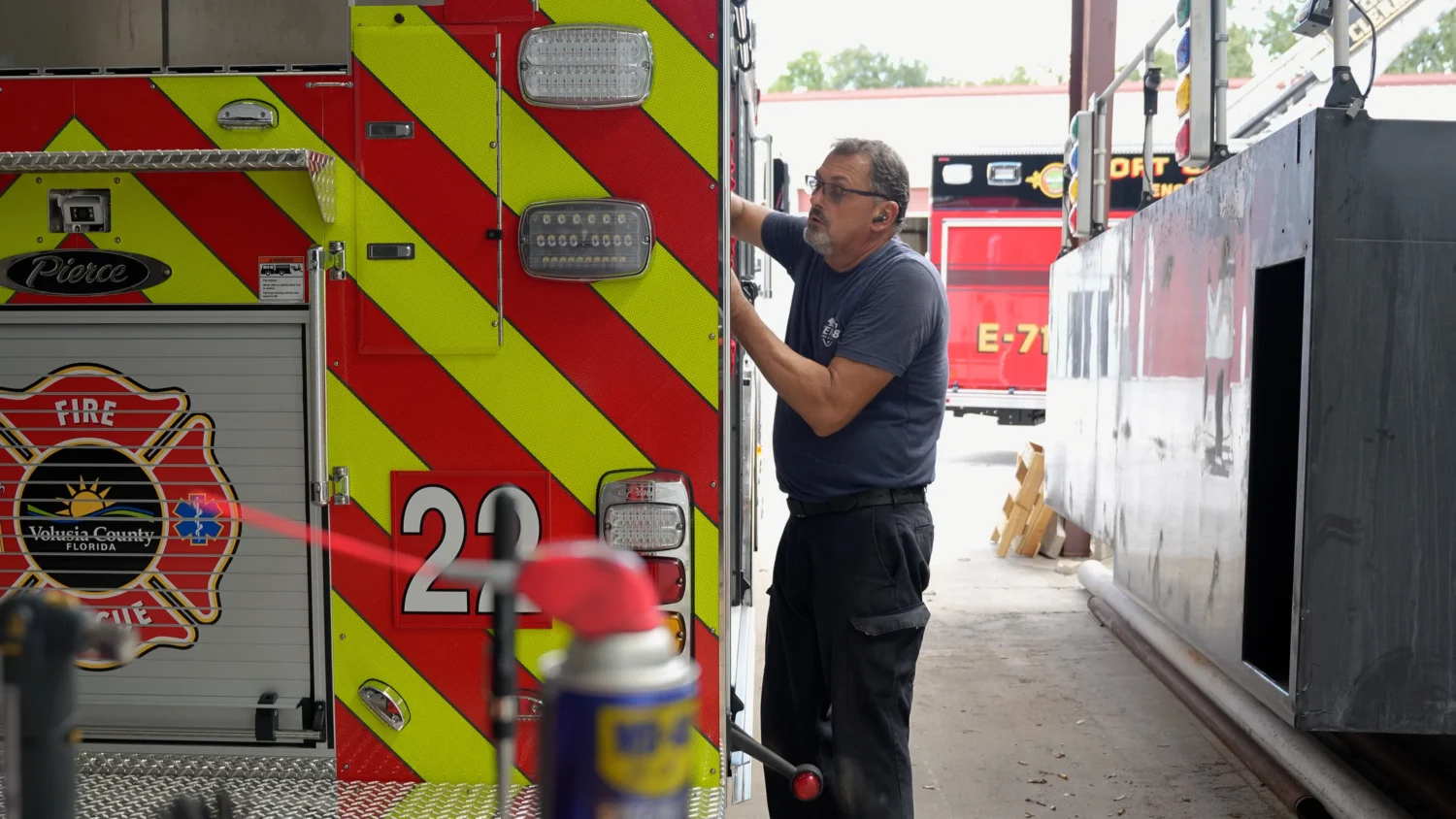
Pumps, Tanks, and Dry Pump Strategies Across Seasons
Water handling systems are the most vulnerable components during cold weather and remain critical during hot-weather wildfire or sprinkler support incidents. Cold weather can freeze pumps and crack valves, while summer heat creates its own set of challenges.
Cold weather pump protection:
- Use dry pump approaches where departments drain and blow out pump housings, intake lines, gauge lines, and booster reels for apparatus stored in unheated bays.
- For heated stations, maintain pump compartment temperatures above freezing and keep pumps wet only when the station environment supports it.
- Inspect water tanks and valves to prevent freezing blockages. Look for leaks that could worsen when tank water expands during a freeze.
- When a truck leaves the station in freezing temperatures, keep circulating valves open to prevent localized freezing.
Summer pump considerations:
- Monitor pump temperature on long-duration flows. Cavitation risk increases when drawing from hot water supplies.
- Inspect foam systems and proportioners for dried residue that can clog during summer operations.
- Check tank level sensors and drain valves for heat-related expansion and leaks.
Ten-8 Fire can inspect pump packing, drain valves, and gauges during seasonal service to prevent freeze-related cracks and summer leaks alike.
Deicing Agents, Corrosion, and Undercarriage Protection
Modern chloride-based deicers are far more aggressive than traditional rock salt. Magnesium chloride and calcium magnesium acetate remain hygroscopic after application, keeping metal surfaces wet and accelerating corrosion on fire truck frames, brake lines, hoses, and electrical harnesses.
Winter maintenance emphasizes freezing prevention and corrosion control from road salts. Here is how to stay ahead:
- Wash the fire apparatus frequently to mitigate corrosion from road salts and de-icing chemicals. Use warm detergent to break down hygroscopic salt residues.
- Corrosion prevention includes washing undercarriages regularly after exposure to road salt, with focused attention on frame rails, wheel wells, and brake areas.
- Apply penetrating rust inhibitors and undercoating before winter as a “bottom-up” protection strategy.
- Inspect wiring harnesses, roll-up door hinges, and compartment seams for salt intrusion.
For coastal departments, as noted in Pierce’s regional apparatus guide, salt air near the ocean creates year-round corrosion challenges that compound winter road salt exposure. Ten-8 Fire can advise on corrosion prevention products and incorporate underbody inspections into routine service appointments.
Seasonal Fire Truck Maintenance for Heat, Wildfire, and Hurricane Seasons
Many fire departments face not only cold weather but also intense summer heat, brush fires, and tropical storm or hurricane deployment. Summer maintenance focuses on defeating extreme heat and managing tire degradation, but the checklist extends further for departments in storm-prone regions.
Summer-specific checks:
- Clean radiator fins and verify transmission temperature monitoring during extended pump operations.
- Inspect hydraulic systems on aerials for seal integrity and fluid condition after high-heat operating cycles.
- Test cab air conditioning to ensure operational safety during long incidents in summer. As reported by FireRescue1, firefighters in Baltimore faced cab temperatures exceeding 100°F due to broken A/C on reserve apparatus.
Wildland and storm deployment:
- Replace dust-clogged air filters and prepare for extended high-RPM pump-and-roll demands.
- Verify lighting, scene power, winch operation, and carry sufficient spare filters and belts for long mutual-aid trips.
- Ensure all equipment is secured and storm-ready before hurricane season.
Ten-8 Fire understands Southeastern heat, humidity, and storm seasons, helping departments adapt preventative maintenance for these realities.
Sample Seasonal Maintenance Calendar for Fire Departments
A visual planning tool helps departments expect and prepare for seasonal tasks rather than reacting to failures. The calendar below should be adjusted for local climate, but it covers the core tasks most departments need.
Example Seasonal Maintenance Schedule Table
| Season | Primary Focus | Key Tasks | Recommended Partner Support |
| Fall (October) | Winter prep | Coolant freeze/boil check, battery load test, air dryer cartridge service, dry pump verification, corrosion treatment application | Ten-8 Fire comprehensive fall inspection |
| Winter (January) | Cold weather operations | Daily air system drain, block heater verification, pump freeze check, undercarriage wash after salt exposure | Ten-8 Fire mid-winter spot checks |
| Spring (April) | Transition to warm weather | De-salt undercarriage inspection, coolant concentration adjustment, A/C system test, tire rotation and sidewall inspection | Ten-8 Fire spring fleet review |
| Summer (July) | Heat and storm readiness | Radiator cleaning, fan clutch test, hydraulic system inspection, wildland deployment gear check, A/C performance test | Ten-8 Fire mid-summer cooling system audit |
Ten-8 Fire can customize this calendar to each department’s apparatus mix and call volume, then manage the schedule through their service centers across the Southeast.
In-House Seasonal Checks vs Partnering with Ten-8 Fire
Many fire departments balance what station crews can handle against what should go to EVT-certified professionals. The most effective programs combine both.
Typical in-house tasks:
- Daily fluid level checks and visual inspections
- Valve exercising and simple fluid top-offs
- Visual corrosion inspections and post-call wash-downs
- Basic block heater and lighting verification
Tasks better suited to Ten-8 Fire:
- Pump performance testing and pump packing replacement
- Full electrical diagnostics and fleet-wide battery testing
- Advanced corrosion treatment and underbody coating
- Complex HVAC, aerial, and hydraulic repairs
In-House vs Ten-8 Fire Maintenance Comparison Table
| Maintenance Approach | Pros | Risks | Best Use Case |
| In-House Only | Lower short-term cost, immediate availability | Missed seasonal issues (hidden corrosion, marginal batteries), limited certifications, gaps in documentation | Daily checks, simple fluid service, visual inspections |
| In-House + Ten-8 Fire Partnership | EVT-certified expertise, manufacturer-aligned records, warranty support, mobile service flexibility | Higher upfront cost (offset by reduced emergency repairs) | Seasonal transitions, pump testing, electrical diagnostics, fleet-wide inspections, NFPA compliance documentation |
Combining department crews with Ten-8 Fire support creates the most resilient year-round maintenance program. Station personnel handle daily readiness while Ten-8 Fire tackles the specialized seasonal work that keeps apparatus reliable across temperature extremes.
Ten-8 Fire’s Seasonal Maintenance Services and Support
Ten-8 Fire has supported first responders across the Southeast for over four decades. With 8 full-service shops in Florida and Georgia, 14 mobile service technicians, and a dedicated refurbishment facility in Forsyth, GA, Ten-8 Fire delivers seasonal maintenance at a scale few partners can match.
Seasonal services include:
- Fall winterization programs and spring de-salt inspections
- Pump testing, coolant analysis, and battery fleet testing
- Scheduled shop visits and on-site mobile service for departments that cannot transport apparatus
- Long-term maintenance contracts tailored to department budgets and operating hours
Ten-8 Fire’s EVT- and ASE-certified technicians service multiple manufacturers, including Pierce, and maintain current OEM training. Whether your fleet needs a pre-winter readiness day or a mid-summer cooling system audit, Ten-8 Fire is the go-to provider for fire apparatus maintenance.
Contact Ten-8 Fire today to design a custom seasonal maintenance plan for your fire trucks and fire apparatus.
Key Seasonal Maintenance Tasks
This quick-reference table summarizes major seasonal tasks, ideal timing, and whether they primarily address hot or cold weather issues.
| System | Task | Season Focus | Critical Why |
| Cooling | Test coolant freeze/boil protection | Cold and Hot | Prevents cracked blocks in winter, overheating shutdowns in summer |
| Electrical | Load-test batteries, inspect alternator | Cold (primary), Hot | Cold cuts cranking power; heat accelerates chemical breakdown |
| Pumps/Water | Dry pump verification, drain all lines | Cold | Eliminates freeze expansion damage to pump housings and valves |
| Air/Brakes | Service air dryer, drain wet tanks daily | Cold | Prevents frozen brake valves and loss of stopping ability |
| Tires | Check pressure, inspect sidewalls and tread | Hot (primary), Cold | Heat raises blowout risk; cold roads demand reliable traction |
| Chassis/Corrosion | Undercarriage wash, apply corrosion inhibitor | Cold (primary) | Road salt and deicers attack frame rails, brake lines, and wiring |
| HVAC | Test cab A/C, verify compartment ventilation | Hot | Protects crew health and prevents electronics from overheating |
| Wildland/Storm | Verify air filters, spare parts, scene power | Hot | Extended deployments demand self-sufficient apparatus |
Ten-8 Fire can help departments adapt this table into a laminated checklist kept on each apparatus for quick daily and seasonal reference.
Hot vs Cold Weather Task
| System | Cold Weather Priority Tasks | Hot Weather Priority Tasks |
| Cooling | Verify block heater operation; test antifreeze levels to -34°F | Inspect radiator fan clutch and shrouds; clean radiator fins |
| Electrical | Load-test batteries; seal terminals against moisture | Inspect cable insulation for heat damage; monitor parasitic loads |
| Pumps/Water | Drain pump, confirm dry pump status; blow out booster reels | Monitor pump case temperature on long flows; inspect foam systems |
| Chassis/Corrosion | Apply undercoating before salt season; wash after every storm | Inspect for UV damage on seals and hoses; maintain undercarriage coating |
| Crew Safety | Verify cab heaters, defrost, and heated mirrors | Test cab A/C and compartment ventilation for heat protection |
Ten-8 Fire’s seasonal inspections address both columns, ensuring year-round readiness regardless of what the forecast brings.
FAQ
These questions cover common concerns fire departments raise about seasonal maintenance that were not fully addressed above. Each answer focuses on actions you can take within the next 30 to 90 days.
When should our department start winter weather preparations for our fire trucks?
Most departments should complete winter prep by mid-October. If your area sees freezing in late September, start earlier. A practical milestone is scheduling Ten-8 Fire inspections 4 to 6 weeks before your local average first freeze date so there is time to address any issues found during the inspection.
Do we still need to winterize if our apparatus are stored in heated bays?
Yes. Fire trucks spend hours outside on scene during winter operations and can cool well below freezing during an extended period of responding to calls. Heated bays reduce risk at the station but do not prevent pump manifolds, valves, or exposed lines from freezing in the field. Winterization remains critical.
How often should we schedule regular preventive maintenance for mixed hot and cold climates?
At minimum, schedule preventive maintenance quarterly with added emphasis on fall and spring visits to transition between temperature extremes. High-call-volume urban departments or heavy-use rural tankers may need tighter intervals. As a reference, Southern Manatee Fire & Rescue in Florida schedules apparatus PM every 150 to 200 operating hours, with Level 2 services covering cooling, A/C, and brake systems every other visit.
What is the best way to handle older apparatus that struggle in extreme cold?
Focus on robust battery systems, verified block heaters, updated air dryers, and aggressive corrosion prevention. Older fire trucks often have weaker seals and less shielding, making them more vulnerable. Discuss retrofit options and prioritized repairs with Ten-8 Fire to keep legacy apparatus reliable through at least one more winter.
Can Ten-8 Fire help us document maintenance for ISO, NFPA, and warranty requirements?
Yes. Ten-8 Fire provides detailed service records and inspection reports aligned with NFPA 1911/1900 standards that support compliance reviews, insurance audits, and warranty claims. Departments can use Ten-8 documentation as the backbone of their own digital or paper maintenance logs, reducing the administrative burden on station crews.