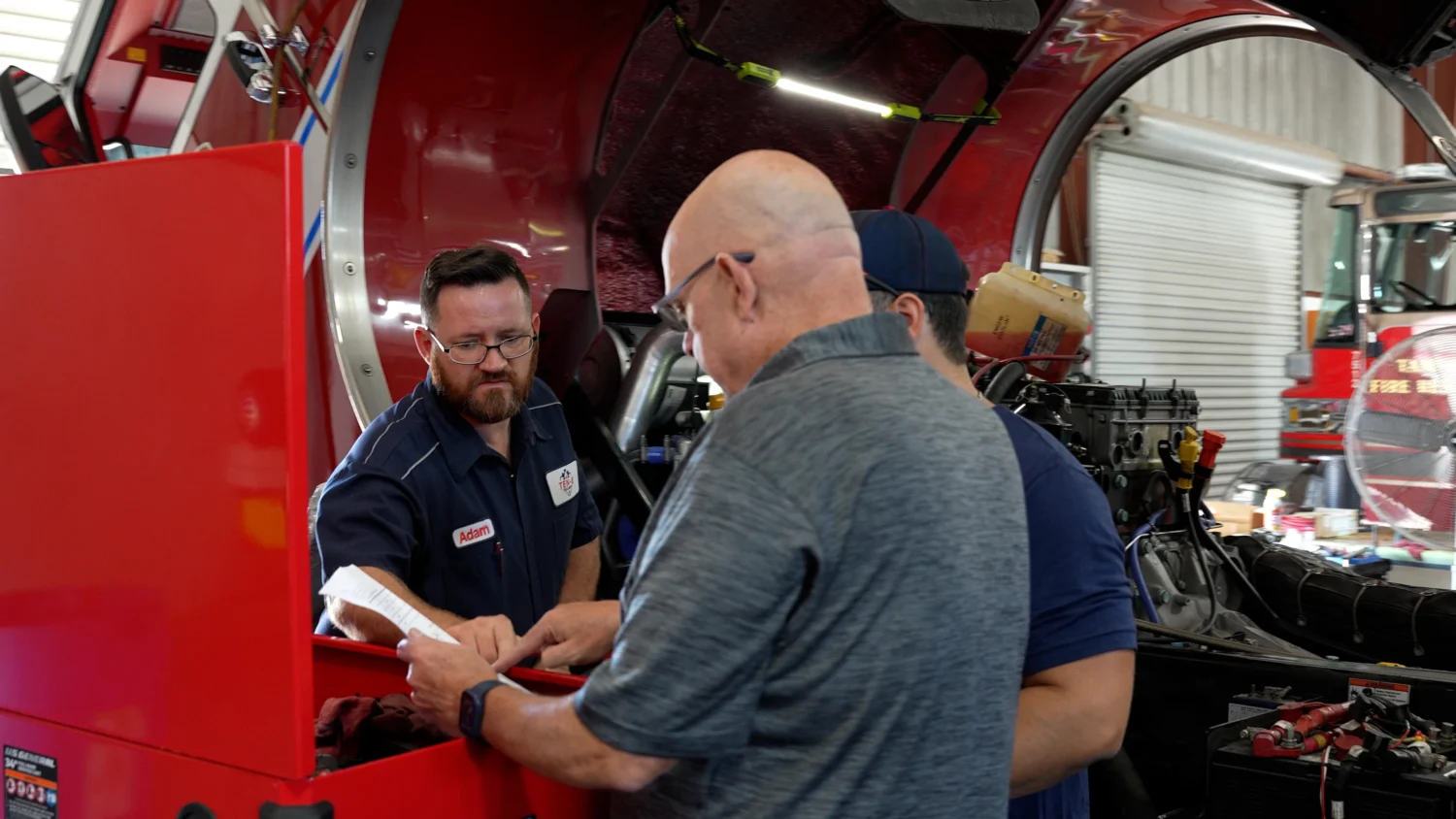
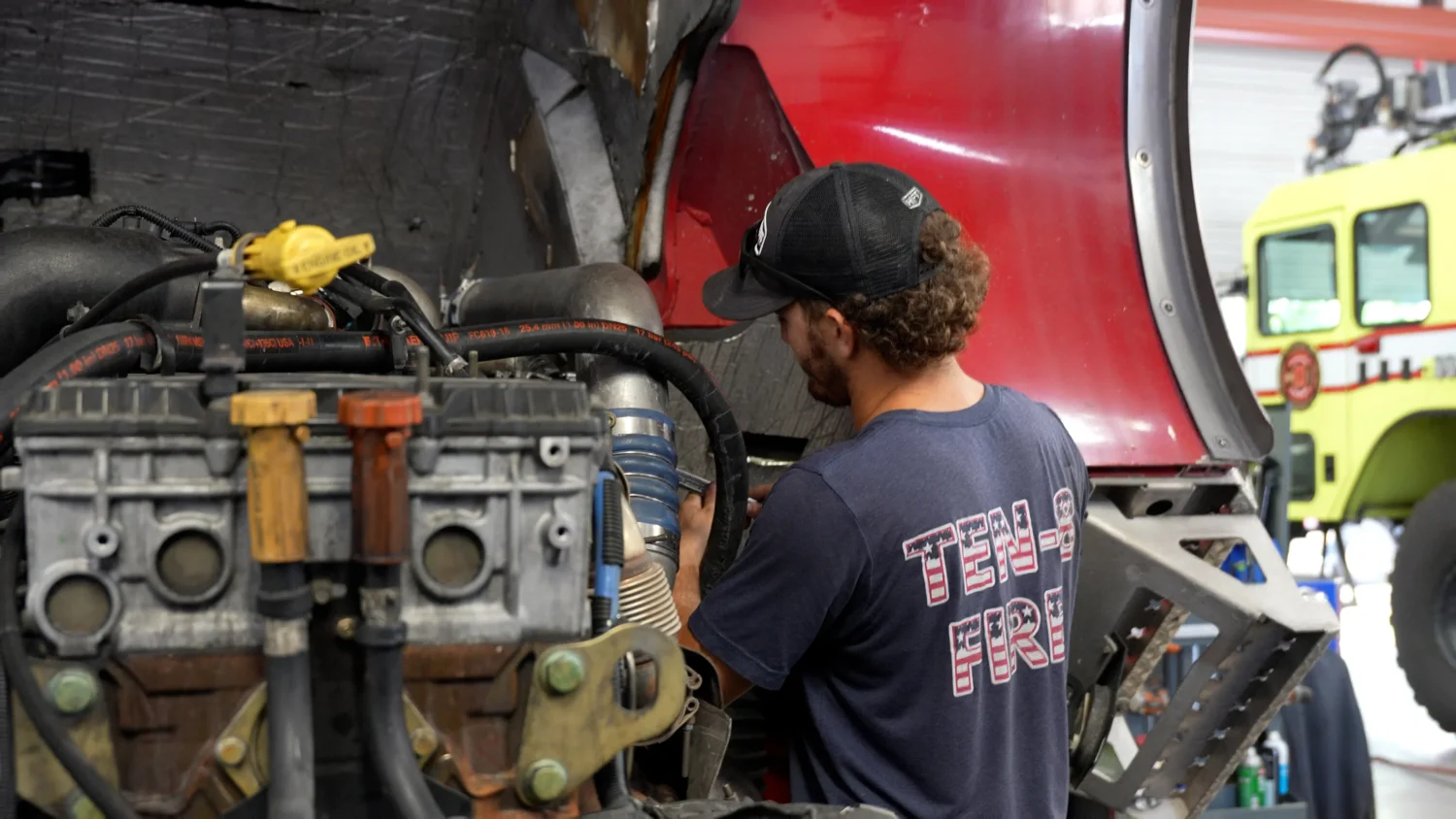
Fire apparatus reliability is not a nice-to-have. It is the foundation of every emergency response your department delivers. When a fire truck fails on the way to a structure fire or a pump loses pressure on scene, the consequences reach far beyond repair costs.
This article breaks down the most common fire apparatus repairs, explains the warning signs your crews can catch early, and provides comparison tables and checklists to help your department reduce downtime, control costs, and keep apparatus in service longer.
Key Takeaways
- The most common fire apparatus repairs involve brakes, pumps, aerial systems, electrical systems, and HVAC/cooling. Each one directly affects firefighter safety and community safety.
- Strong daily checks, preventive maintenance, and clear record keeping can cut emergency repair costs by 20 to 40 percent and extend a fire truck’s first line service life toward NFPA recommendations.
- Many “sudden” equipment failures on fire trucks begin as small, visible issues that crews can catch early: leaks, warning lights, slow cranking, odd noises, or soft braking.
- Ten-8 Fire is the go-to partner for fire apparatus maintenance, diagnostics, and repair across the Southeast, handling everything from routine inspections to complex pump and aerial rebuilds.
- This article provides practical checklists, real-world cost data, and multiple comparison tables to help fire departments determine when to repair in-house, outsource, or consider mid-life refurbishment.
Why Common Fire Apparatus Repairs Matter For Every Fire Department
Over 27,000 U.S. fire departments respond to tens of millions of calls each year. Firefighters responded to nearly 42.4 million emergency calls in 2023 alone. Apparatus reliability is a life-and-death matter, not a convenience.
Even a single out-of-service unit during a structure fire or multi-vehicle incident can slow response readiness, strain mutual aid, and increase risk to firefighters and citizens. Departments face high costs when fire trucks are out of service, and the ripple effects extend into staffing, insurance, and public safety.
Recurring repair patterns across fire apparatus reflect both harsh operating conditions and gaps in proper maintenance. Fire apparatus combine heavy-duty commercial truck mechanics with complex pumping and aerial systems, and they endure grueling conditions including heavy idling and sudden acceleration. These factors drive predictable failure trends in brakes, pumps, electrical systems, and aerial hydraulics.
Ten-8 Fire technicians see similar failure trends across Pierce, Braun, and other leading manufacturers. That experience allows Ten-8 Fire to recommend realistic fleet maintenance plans that reduce repeat failures across your department.
Here are the key reasons understanding common repairs matters:
- Smarter budgeting based on predictable maintenance costs rather than emergency surprises
- Better staffing decisions when you know which systems need certified EVTs vs. in-house personnel
- Improved operational readiness when you can maintain equipment in good condition year-round
- Stronger compliance posture with NFPA standards, ISO, and insurance requirements
Brake System Repairs: The Most Frequent And Most Dangerous
Brake-related issues are among the most common and highest-risk fire apparatus repairs, particularly on heavy front-line engines and ladder trucks. Heavy loads and abrupt stops cause rapid wear on brake components, and the consequences of brake failure during an emergency call are severe.
Specific brake components that frequently require repair or replacement on fire trucks include:
- Air compressors and dryers
- Brake chambers and slack adjusters
- Rotors and drums
- Pads and linings
- ABS sensors and control valves
- Emergency brake valves
Common symptoms noticed during daily checks and road tests include a soft pedal feel, longer stopping distance, pulling to one side, audible air leaks, low air pressure alarms, or ABS warning lights. These often precede more dangerous failures like wheel lock or brake fade.
Fire apparatus operate under conditions that accelerate brake wear compared with civilian vehicles. Frequent hard braking in urban stop-and-go driving, sustained pump operations that add heat and load, and the sheer weight of a fully loaded engine all contribute. NFPA 1900 requires air and hydraulic brake systems to meet strict leak and performance standards, and inadequate braking is an immediate out-of-service trigger.
Ten-8 Fire’s EVT-certified technicians use manufacturer-specific procedures to identify root causes. For example, diagnosing whether a soft pedal stems from a chamber leak versus worn lining changes the repair path entirely. That precision avoids wasted parts and speeds return to service.
Brake Maintenance Vs. Emergency Repair Costs
The table below offers approximate cost ranges to illustrate how routine preventive maintenance reduces total repair costs for fire apparatus brake systems. Actual pricing varies by local labor rates, apparatus age, and component availability.
I removed the table as pricing varies greatly due to axle models
Preventing major brake issues typically costs 25 to 40 percent of what emergency repairs run. Ten-8 Fire can help departments model their own cost curves based on local conditions, apparatus age, and call volume. Scheduled brake inspections belong in every fire department maintenance plan.
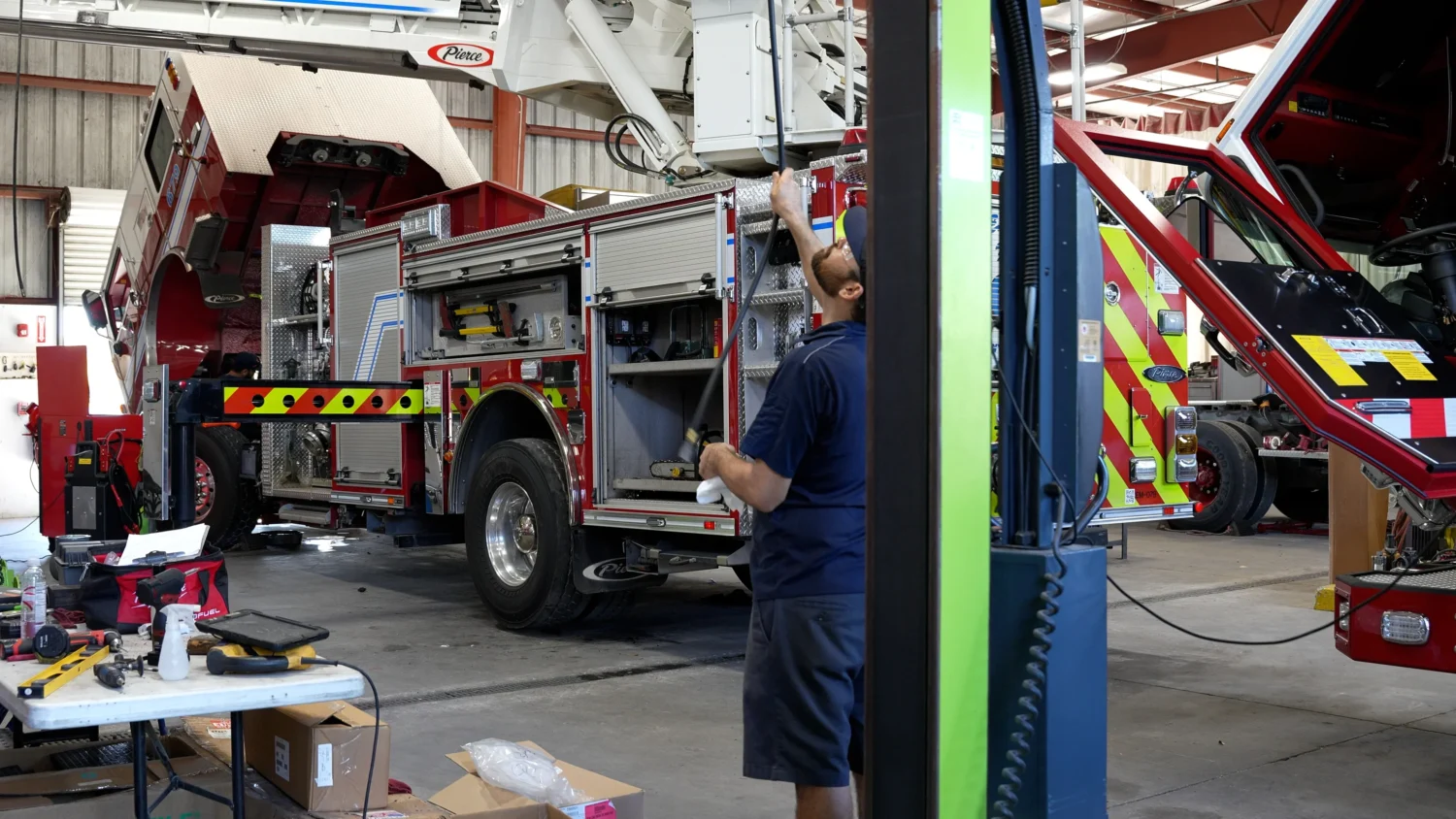
Fire Pump Repairs: Seals, Valves, And Flow Problems
Pumps are central to a fire truck’s mission. Fire pumps handle high pressures and varying water qualities during operation, and the most common repairs relate to leaks, pressure loss, hard-to-move valves, and gauge inaccuracies.
Frequent pump repairs include:
- Mechanical seal replacement
- Packing adjustments
- Valve rebuilds or replacements
- Primer motor or pump drive repairs
- Pressure governor replacement
- Corroded piping sections or intake strainers
- Worn impellers and wear rings
Neglected preventative maintenance accelerates pump degradation. Skipping annual pump tests, failing to flush after using dirty or salty water, or ignoring minor drips can lead to costly overhauls. A worn impeller reduces efficiency gradually, requiring more RPM to achieve rated capacity. A corroded intake strainer allows debris that damages seal faces or causes air binding. Complete pump overhauls can cost $25,000 to $50,000 or more, especially on large pumpers.
Annual pump tests are required per NFPA 1900 standards. These tests document flow and pressure performance over time, creating the data departments need to decide on repair versus full rebuild. Pump testing results also feed directly into ISO evaluations and insurance documentation.
Ten-8 Fire provides full pump testing, diagnostics, and repair services, including post-repair pump tests and detailed reports. Our technicians perform annual testing that satisfies regulatory compliance requirements while giving departments clear evidence of each unit’s operational health.
Aerial Device Repairs: Hydraulics, Cables, And Structural Concerns
Aerial repairs are among the most specialized and high-liability fire apparatus repairs, involving ladders, platforms, outriggers, and hydraulic systems. Aerial devices may fail if their hydraulic and structural components are not maintained on schedule.
Common aerial issues include:
- Hydraulic leaks at cylinders and hoses
- Worn slip rings and turntable bearing wear
- Cable tension problems and frayed cables
- Sensor or limit switch failures
- Corroded or cracked structural components (rails, torque boxes)
Typical early warning signs include slower-than-normal extension, jerky ladder movement, unusual noises from the turntable, drift or sag under load, or intermittent aerial interlock problems. Removed this sentence.
Annual third-party aerial testing, non-destructive testing (NDT), and load tests catch microscopic cracks or fatigue before they become catastrophic. NFPA 1900 requires NDT at defined intervals and visual inspections per manufacturer recommendations.
Ten-8 Fire partners with recognized testing providers and coordinates inspection, repair, and documentation so aerials return to service with clear test records. Only EVT-certified and factory-trained technicians should perform structural or hydraulic repairs on aerial devices.
Electrical System Repairs: The Hidden Source Of Many Apparatus Failures
Electrical systems failures can lead to operational failures if not addressed promptly. Modern fire trucks feature extensive electrical systems for operations and communication, and electrical issues are among the most frequent root causes of out-of-service reports.
Common electrical repairs include:
- Battery replacement –Removed Pricing- Inaccurate-Better not to ballpark
- Alternator failures –Removed Pricing- Inaccurate-Better not to ballpark
- Corroded ground connections and battery cables
- Damaged wiring harnesses
- Blown fuses and multiplex module issues
- Siren and light controller failures
- Major harness or control module replacement
Water intrusion from hose operations, washing, and storms degrades insulation and connectors. Fire apparatus experience corrosion from road salt and environmental exposure, which is especially aggressive on apparatus operating near the coast or in colder climates. Connectors under body panels and in pump panels are particularly vulnerable.
Modern apparatus use both traditional wiring harnesses and multiplexed electrical systems. Multiplex systems consolidate signals but are more sensitive to moisture and corrosion. Both require proper schematics, diagnostic tools, and record keeping to repair efficiently.
Symptoms crews should catch during daily checks:
- Slow engine cranking
- Dim or flickering lighting
- Intermittent warning devices
- Repeated fuse blows
- Unexplained electronic error codes
Ten-8 Fire’s service facilities invest in manufacturer-specific diagnostic software, laptop interfaces, and up-to-date service manuals. This technology dramatically shortens troubleshooting time and reduces unnecessary parts replacement, improving cost efficiency for every department they serve.
Cooling, HVAC, And Engine-Related Repairs On Fire Trucks
Fire apparatus operate for extended periods at high idle during pumping, which stresses cooling and HVAC systems more than typical commercial trucks. Fire apparatus typically require diesel emissions and aftertreatment repairs as part of engine-related maintenance, adding another layer of complexity.
Common repairs in this category include:
- Radiator leaks Removed Pricing- Inaccurate-Better not to ballpark
- Failed fan clutches or fan drives
- Worn or cracked fan belts
- Thermostat failures
- Plugged charge-air coolers or intercoolers
- Heater core leaks
- Cab HVAC blower motor or control failures
Overheating during long-duration operations can damage engines, transmissions, and pump gearboxes, turning a simple cooling system repair into a major powertrain overhaul. A failed thermostat sitting undetected becomes an engine-ending problem under sustained load.
Inspection points for daily and weekly checks:
- Coolant level and condition
- Visible leaks under the vehicle or around hose connections
- Proper fan engagement when the engine is under load
- Temperature gauge behavior during operations
- Cab climate control function
Ten-8 Fire technicians routinely inspect cooling systems during scheduled preventive maintenance services to catch small leaks or weak components before summer or wildfire seasons surge call volume.
Daily Checks That Prevent The Most Common Repairs
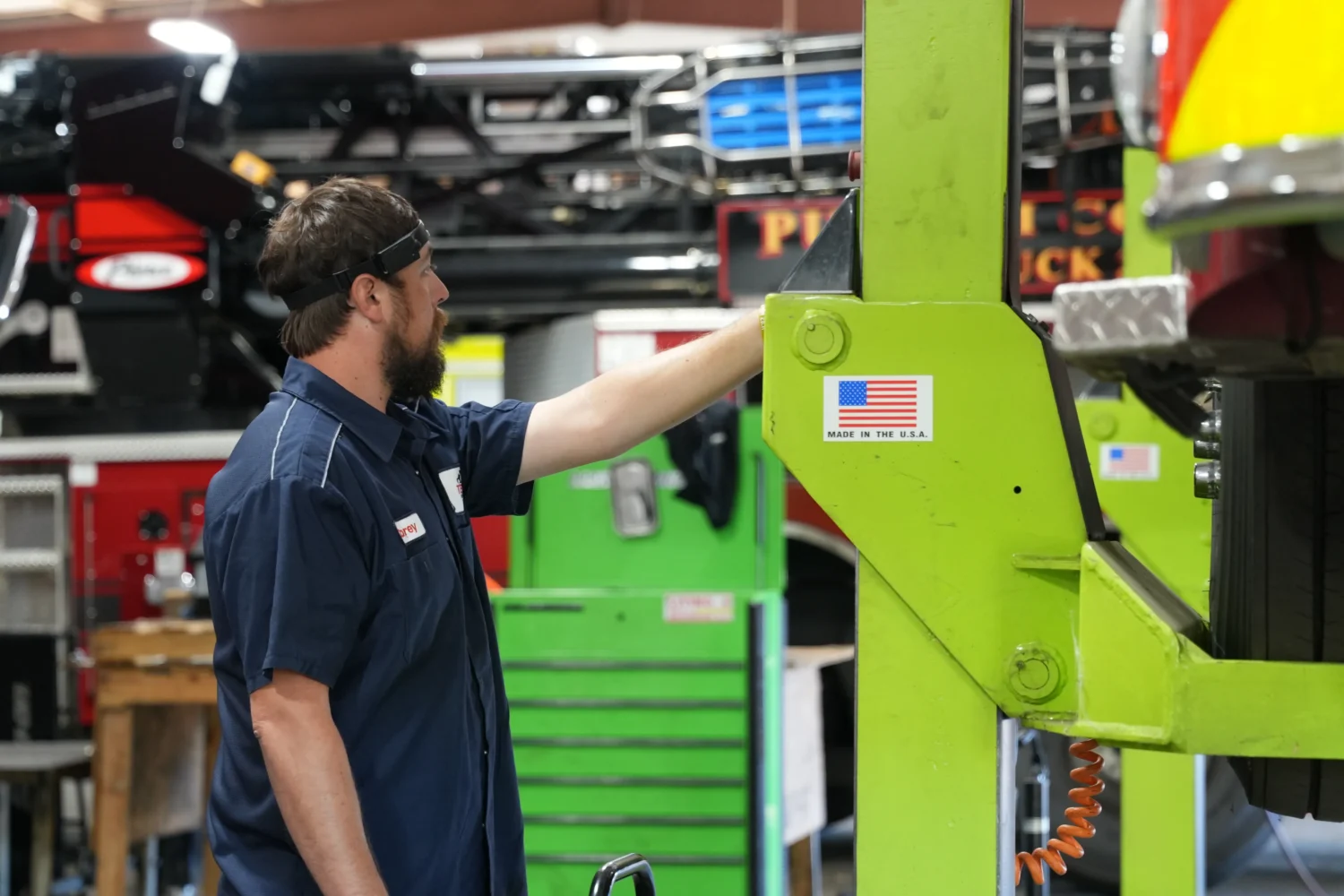
Thorough daily checks by driver/operators are the least expensive and most powerful tool to prevent common fire apparatus repairs. Routine inspections help prevent small issues from becoming big problems. Daily inspections are critical before every shift or emergency call.
Concrete daily checks for fire trucks include:
- Fluid levels: engine oil, coolant, transmission fluid, power steering
- Tire condition and pressure
- All lighting and warning devices (routine inspections include checking fluid levels and lights)
- Sirens and horns
- Brake air pressure build-up rate (minimum threshold per manufacturer specs)
- Visible leaks under the vehicle
- Pump panel indicators and gauges
- Basic cab electronics, radios, and MDT/CAD systems
- Belt condition and visible hose integrity
Pay special attention to electrical symptoms. Early detection of dim lighting or slow cranking often prevents complete electrical failure during handling of an emergency response. Routine checks help prevent small issues from becoming major problems across every system on the apparatus.
Documenting daily checks supports proper maintenance scheduling, helps justify budget requests to local leadership, and strengthens defense if an incident results in litigation. Standardized inspections improve maintenance efficiency and safety across shifts.
Ten-8 Fire can help departments standardize daily check sheets that align with manufacturer guidelines and NFPA standards, so every operator performs the same minimum inspection regardless of shift or station.
Preventive Maintenance Vs. “Run-To-Failure”: Comparison Table
Many repair decisions boil down to whether a department invests in a structured maintenance program or reacts only when the fire apparatus breaks. Preventive maintenance programs reduce unplanned downtime and repair costs. Preventive maintenance reduces unexpected repair costs significantly over the life of any unit.
| Aspect | Preventive Maintenance Program | Run-To-Failure / Reactive Repairs |
| Short-Term Budget Impact | Predictable, moderate costs scheduled quarterly or semi-annually | Low until major breakdowns, then high spikes |
| Long-Term Repair Costs | Cumulatively lower; small repairs prevent large failures | Climb steeply as systems deteriorate |
| Reliability During Emergencies | Higher; fewer unexpected breakdowns, better equipment availability | Lower; risk of being out of service during critical events |
| Downtime | Planned and minimal; servicing scheduled during non-peak times | Unplanned, often during worst times |
| Record Keeping & Compliance | Detailed; aids ISO, NFPA, insurance, and warranty coverage | Often incomplete; gaps hinder analysis and compliance |
| Fleet Support | Ten-8 Fire designs schedules tailored to call volume, climate, and apparatus mix | Department absorbs full diagnostic burden with limited tooling |
Modern fire departments treating apparatus as critical infrastructure, not just vehicles, overwhelmingly choose preventive maintenance. The cost effective approach is always to maintain proactively rather than react to failures.
Common Apparatus Systems And Typical Repair Triggers
The following table summarizes the most common fire apparatus systems, the usual repair triggers, and the maintenance actions that often prevent those repairs.
| System | Typical Repair Trigger | Preventive Maintenance Action |
| Brakes | Air leaks, worn linings, ABS sensor failure | Daily brake air pressure checks, slack adjuster inspection, pad wear checks |
| Pumps & Flow Systems | Mechanical seal leaks, flow loss, impeller wear | Annual pump test, seal replacement, intake strainer cleaning, flow trending |
| Aerial Systems | Hydraulic hose leaks, structural fatigue, frayed cables | Visual inspections, hydraulic fluid changes, NDT, load testing |
| Electrical / Multiplex | Corroded grounds, loose connectors, module failure | Connector inspections, battery tests, ground point cleaning, diagnostic scans |
| Cooling / HVAC & Engine | Radiator leaks, thermostat failure, overheated engine | Coolant tests, hose and belt inspections, fan/clutch checks under idle |
| Steering & Suspension | Worn bushings, misalignment, axle damage | Lubrication, alignment checks, suspension component inspection |
| Body / Corrosion | Rust, roll-up door failure, damaged compartments | Undercarriage washing, paint chip treatment, hinge lubrication |
Ten-8 Fire uses similar system-level views when reviewing fleet repair histories during maintenance consultations with fire chiefs and fleet managers, helping departments spot patterns before they become budget emergencies.
Record Keeping: The Backbone Of Effective Fire Apparatus Maintenance
Accurate, detailed record keeping is essential for spotting patterns in recurring repairs, validating warranty coverage, and meeting NFPA 1900 and ISO documentation expectations. Accurate documentation supports future planning and compliance across every apparatus in your fleet. Without documentation, warranty claims may be denied, leaving departments to absorb costs that manufacturers should cover.
Specific records that should be kept for each fire truck:
- Daily and weekly inspection logs
- Preventive maintenance schedules and completion dates
- Repair orders with cause descriptions and OEM parts used
- Technician or EVT names and certifications
- Pump and aerial test reports with performance data
- Out-of-service dates with specific reasons documented
- Detailed records include maintenance requests, dates, and EVT names for every job performed
Technicians must document maintenance to support warranty claims and protect the department’s financial position. Maintenance records help defend against liability in accidents, providing evidence that the apparatus was maintained per industry standards and federal standards.
Digital fleet management software or well-structured spreadsheets help track repair costs by system, making it easier to see when an apparatus crosses the point where replacement is more cost effective than continued repairs.
Ten-8 Fire provides service histories, detailed invoices, and test reports that integrate into a department’s record keeping system. This supports both audits and long-term capital planning discussions with municipal leadership.
When To Repair In-House Vs. Outsource
I would remove this entire section and reference NFPA 1900. While the fire department or “AHJ” has complete control over who does what to their apparatus, NFPA 1071, which is now 1900 does list a guide as to what repairs an EVT should complete, and now I see its duplicated below anyway.
Most fire departments mix in-house daily checks and minor repairs with outsourced heavy or specialized work to certified EVT shops. The line between the two should be drawn based on safety risk, equipment requirements, and personnel qualifications.
Tasks suitable for in-house staff:
- Daily checks and fluid level top-offs
- Basic light bulb replacements
- Minor interior or seat repairs
- Simple battery charging or replacement
- Non-structural hose replacements
Tasks that should be outsourced to Ten-8 Fire:
- Brake system overhauls and air system diagnostics
- Pump rebuilds and NFPA-compliant pump testing
- Aerial structural or hydraulic repairs
- Complex electrical and multiplex diagnostics
- Transmission and engine overhauls
- Any work affecting critical safety systems
| Factor | In-House Repair | Ten-8 Fire Service |
| Tooling & Diagnostics | Limited to basic hand tools | OEM diagnostic software, factory tools for Pierce, Braun, and other manufacturers |
| Parts Access | General aftermarket, longer lead times | Direct OEM parts inventory, faster turnaround |
| Technician Certification | Varies by department | EVT-certified, manufacturer-trained technicians |
| Warranty Protection | Risk of voiding coverage | Repairs documented to maintain warranty compliance |
Ten-8 Fire is the go-to partner for complex, safety-critical, and warranty-sensitive repairs, while still respecting that departments may handle routine items with local personnel.
Ten-8 Fire: Your Partner For Fire Apparatus Maintenance Across The Southeast
Ten-8 Fire has supported first responders for over 40 years across Southeastern states, including Florida, Georgia, and neighboring regions. Their alignment with major OEMs like Pierce Manufacturing and Braun Ambulances means departments get factory-backed service from technicians who know the equipment inside and out.
Ten-8 Fire’s capabilities include:
- Full-service fire apparatus maintenance and repair
- NFPA-compliant pump and aerial testing
- Mobile service options to reduce downtime
- Rapid access to OEM parts through established manufacturer relationships
- Preventive maintenance programs tailored to department size, call volume, and climate
Ten-8 Fire collaborates with fire chiefs, fleet managers, and city leadership to plan preventive maintenance schedules that stabilize maintenance costs and minimize unplanned apparatus downtime. Their certified EVTs are regularly trained on new systems, including advanced electrical systems and multiplex networks on modern fire trucks. Technicians should complete manufacturer-specific training for apparatus to perform at this level.
If your department is ready to upgrade its approach to fleet maintenance, contact Ten-8 Fire to schedule an apparatus inspection, request a maintenance program review, or obtain an estimate for recurring repair issues.
FAQ: Common Questions About Fire Apparatus Repairs And Maintenance
How often should we schedule preventive maintenance on frontline fire trucks?
A typical preventive maintenance cadence includes daily checks by operators before every shift, weekly and monthly inspections covering tires, fluid levels, and warning systems, and more in-depth services every 250 to 300 engine hours or at least twice per year. Fire departments maintain a rigorous schedule of routine and corrective repairs to keep apparatus ready.
High-call-volume urban departments may need shorter intervals, while rural departments might base intervals more on time than mileage due to extended idling and environmental exposure. Ten-8 Fire can review your department’s call data, climate, and apparatus mix to recommend specific preventive maintenance intervals in line with NFPA 1911 and OEM guidance. NFPA 1911 also requires annual testing for vehicle weight as part of the compliance framework.
At what point do repeated repairs mean it is time to replace or refurbish a fire truck?
When annual repair costs consistently exceed a threshold relative to the rig’s replacement value, or when major systems like the engine, transmission, pump, and aerial all require large repairs within a 3 to 5 year window, replacement or refurbishment should be evaluated. Fire apparatus typically require replacement every 10 to 15 years, and departments should replace frontline apparatus every 10 years on average to maintain operational reliability. Fire truck refurbishment can rival the cost of a new vehicle, so the math must be done carefully.
NFPA suggests around 15 years for frontline service and 20 to 25 years total life as common benchmarks, but actual decisions should consider repair history, safety issues, and operational demands. Nearly half of U.S. fire engines are already 15 years or older, highlighting how critical these decisions are becoming. Ten-8 Fire can provide detailed service histories and cost summaries to support life-cycle cost analysis and capital planning.
What maintenance tasks should only be performed by EVT-certified technicians?
Specific tasks requiring EVT-level expertise include brake system diagnosis and adjustment, pump and aerial repairs, steering and suspension work, complex electrical and multiplex diagnostics, and any work affecting critical safety systems. Technicians must have NFPA 1071 certifications to perform these roles. Emergency Vehicle Technicians need vocational school degrees as a foundation for their specialized training.
Ten-8 Fire staffs EVT-certified personnel who meet or exceed NFPA 1071 expectations. Departments should maintain clear internal policies defining which tasks are appropriate for in-house staff and which require outside EVT support from partners like Ten-8 Fire.
How can better record keeping actually reduce our repair costs?
Detailed records help departments identify patterns such as recurring electrical failures on a specific unit, chronic brake wear from certain routes, or seasonal cooling issues. Once identified, these patterns can be addressed proactively rather than reactively. For instance, if one engine repeatedly shows brake chamber leaks, the root cause might be an environmental factor or operating pattern rather than a parts defect.
Thorough documentation supports warranty claims and can prevent the department from paying for repairs that should be covered by the manufacturer. Ten-8 Fire’s invoices, test reports, and service summaries integrate into existing fleet software or manual logs, giving chiefs and fleet managers clear evidence for budget requests, replacement timelines, and community presentations about public safety investments.
What should we do if we discover a serious problem during a daily or preventive maintenance check?
If a condition meets NFPA 1900 out-of-service criteria or clearly threatens safe operation (brake failure, steering issues, pump not engaging, major fluid leaks, or aerial malfunctions), the apparatus should be removed from in service fire apparatus status immediately. Do not attempt to operate the unit on an emergency call.
Document the finding in writing, report it to the Authority Having Jurisdiction, and communicate the issue to all shifts. Update the unit’s status on any dispatch or CAD systems. Contact Ten-8 Fire promptly for assessment, schedule repair or towing as needed, and plan coverage with mutual aid or reserve apparatus until the unit is restored to service.